
Why consider Kampar Fish Ball Sdn Bhd for your kitchen?
A manufacturer you can contact directly, a homemade family recipe from 1968 and a named range of fish products, made on our own machines in Subang Jaya.
Match the product to your menu
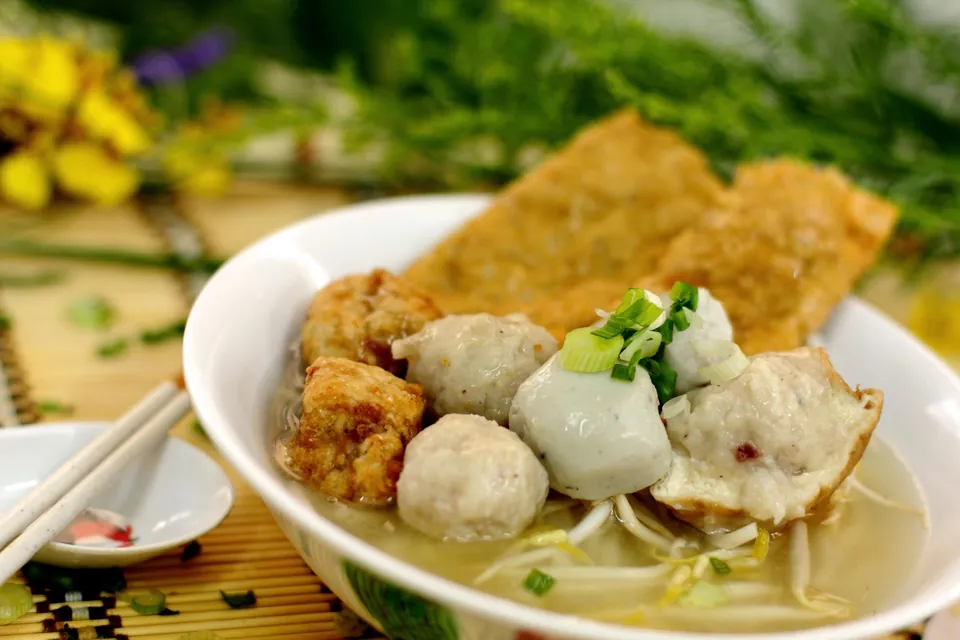
Start with the dish and portion you plan to serve. Kampar Fish Ball Sdn Bhd’s main line is the five core ingredients of Kampar fish ball noodles (金宝鱼丸粉料): 西刀鱼丸, 炸鱼丸, 吊片飞丸, 酿腐竹 and 酿豆腐, and our wholesale supply is mainly these Kampar ingredients. Fish cake and Kampar Curry Noodle Paste complete the range. Discuss the exact product’s ingredients, allergens and preparation before using it on your menu.
Each product has its own page: Kampar fish balls, dried cuttlefish fish balls, fried fish balls, stuffed beancurd skin, stuffed tofu, fish cake and curry noodle paste.
Start with the way your kitchen intends to use fish balls: in noodle soup, as part of a hotpot dish or in another dish. If you also need fish cake, mention it separately. Sharing the intended use gives the team a clearer enquiry than asking for a general product list. Kampar Fish Ball sells fish products; the noodle bowls on this website are serving ideas.
If you are opening a new stall or changing an existing menu, tell us that too. Knowing whether you are replacing a current supplier or starting fresh helps us suggest a sensible first order size.
Different dishes ask different things of a fish ball. This table is a starting point for matching dishes to product types when you talk to us.
| Dish | What the fish balls need to do | Ask us about |
|---|---|---|
| Kampar fish ball noodles | Give the bowl its classic five toppings | All five: 西刀鱼丸, 炸鱼丸, 吊片飞丸, 酿腐竹, 酿豆腐 |
| Fish ball noodle soup | Stay springy in hot broth | White fish balls and sliced fish cake |
| Dry (kon loh) noodles | Hold flavour in a small side soup | White fish balls and fried fish balls |
| Steamboat sets | Hold their shape through long simmering | A mix of white and fried fish balls |
| Fried snacks and skewers | Puff and brown evenly | Products suited to frying |
| Curry noodles | Soak up a rich curry broth | Fried fish balls, 酿腐竹, 酿豆腐 and our curry noodle paste |
Plan a practical first enquiry
You do not need a precise order to start. Share your kitchen type, location, product interest and rough quantity or frequency. Try the product in your own dish once suitability and availability are agreed.
Prepare a quantity estimate for your kitchen
Use your expected servings and intended fish ball portion to estimate demand for your chosen ordering period. A rough estimate is enough to start. Once product and pack details are confirmed, check how that estimate translates into the actual buying unit.
- Business name and kitchen location
- Dish or intended use
- Estimated quantity and likely order frequency
- Preferred start date and any timing constraints
A simple calculation turns your sales into a weekly figure: bowls per day, multiplied by fish balls per bowl, multiplied by trading days. The example below uses round numbers for illustration only; use your own portion size and sales.
| Bowls per day | Fish balls per bowl | Trading days | Fish balls per week |
|---|---|---|---|
| 40 | 5 | 6 | 1,200 |
| 80 | 5 | 6 | 2,400 |
| 120 | 6 | 6 | 4,320 |
Add a margin for busy days and festive weeks, then ask us how the total converts into packs of the product you choose.
Check suitability for your menu
Ask about the exact fish ball product before deciding how it fits your menu. Ask us for the size, ingredients and cooking details of that product, then try it in your recipe.
- Available sizes and product options
- Ingredients, allergens and any certification evidence your business needs
- Pack details, storage requirements and shelf life
- Product-specific cooking instructions
Kitchen storage and handling
Fish balls are a fresh fish product, so treat them like seafood in your cold chain. The WHO Five Keys to Safer Food set out the basics: keep cold food below 5°C, keep raw and cooked food apart, cook food thoroughly and do not leave cooked food at room temperature for more than 2 hours.
- Store packs as the label directs, chilled or frozen, as soon as they arrive.
- Rotate stock: first in, first out, and label opened packs with the date.
- Thaw frozen packs in the refrigerator overnight, not on the counter.
- Keep fish balls for the day's service cold until they go into the pot.
- Hold cooked fish balls hot during service, or cool and refrigerate them promptly.
Train every member of staff who handles fish products on these steps, including part-time and weekend staff.
Keeping bowls consistent at busy times
Customers come back for a bowl that tastes the same every time. A few kitchen habits help fish balls come out the same at the first service of the day and in the busiest hour of lunch.
- Use a measured portion for every bowl, such as a set number of fish balls and fish cake slices, and show it to every cook.
- Keep the broth at a steady simmer during service so fish balls heat evenly; a hard boil can make them tough.
- Cook fish balls in small batches through service rather than all at the start, so they do not sit in hot broth for hours.
- Taste the broth at the start of each service and adjust the seasoning before the first order.
- Write the cooking time for each product on a card near the stove.
When a new cook joins the team, walk them through the same steps. Consistency is what turns a first-time customer into a regular.
Planning regular orders
If you expect to buy regularly, explain the frequency and any changes in demand. Ask the team to confirm availability, buying units, prices and any minimum quantity. Tell us your collection or delivery needs and we will agree the arrangement with you before your menu launch.
- Set a regular order day that suits your storage space and sales pattern.
- Flag festive peaks early, especially the weeks before Chinese New Year, when demand rises.
- Review your quantity monthly against what you actually sold, and adjust.
- Keep one contact in your team who places orders, so details stay consistent.
We are open Monday to Saturday, 6:30am to 3:30pm, and closed on Sunday, so plan Sunday trading stock in advance.
From menu planning to ordering
Use our product hub to compare the range, then Wholesale for quotation details. Confirm availability, cooking and storage instructions, and collection or delivery timing before committing to a menu launch.
Open the restaurant enquiry draft in WhatsApp and add your requirements. Ask any outstanding product questions, then confirm prices and supply arrangements with the team. The wholesale page explains what to include when requesting a quotation.
Comparing suppliers? Our fish ball buying guide explains how to compare quotations on the same basis. For bowl ideas you can adapt for your menu, see the Kampar fish ball noodle guide.
Quick answers
Do you supply restaurants and noodle stalls?
Yes. We supply retail and wholesale buyers, including food businesses. Send your location, estimated quantity and preferred start date for a quotation.
Can you suggest products for a new menu?
Yes. Tell us the dishes you plan to serve and we will suggest products from our range to try first.
Can I try a product before committing to regular orders?
Ask the team about buying a smaller quantity first so you can test it in your recipe.
Do you deliver?
Tell us your location and preferred date. We will confirm which collection or delivery options suit you before the first order.
How far ahead should I order for Chinese New Year?
Contact us several weeks ahead with your expected festive quantity, so we can confirm the product, quantity and collection dates before the rush.