
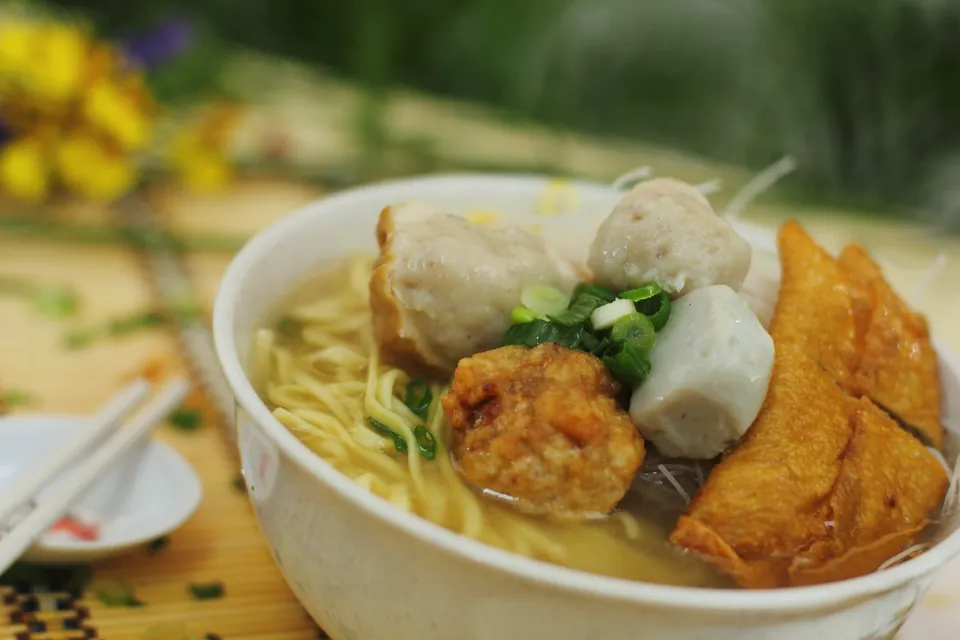
What are Kampar fish ball noodles?
Kampar fish ball noodles (金宝鱼丸粉, often just 金宝粉) are a simple bowl built around fish balls: noodles, a light broth or a dry dressing and five classic toppings, namely white fish balls, fried fish balls, dried cuttlefish balls, stuffed beancurd skin and stuffed tofu, finished with spring onion and chilli. The appeal is in the toppings themselves. A good fish ball is springy, smooth and tastes clearly of fish, so the rest of the bowl is kept plain to let it stand out.
Kampar is a town in the Kinta Valley of Perak, founded in 1887 and once a busy tin-mining centre. It is known for its food, and fish ball noodles are among the dishes most often linked with the town, alongside its chicken biscuits and claypot chicken rice. Over time, "Kampar" has also become a way of describing a style of fish ball noodle that people look for well beyond the town. You will find the bowl in kopitiams around Kampar and across Perak.
Kampar, Ipoh and Perak: what the names mean
People search for "Kampar fish ball", "Ipoh fish ball noodle" and "Perak fish noodle" and often mean much the same bowl. The names describe places first and styles second. This table sets out the difference.
| Name | What it is | What people usually mean |
|---|---|---|
| Kampar | A town in the Kinta Valley, Perak, about 33 km south of Ipoh | Fish ball noodles in the style the town is known for, with springy fish balls and fried fish balls |
| Ipoh | The state capital of Perak and a major food city | Fish ball noodles as served in Ipoh shops and coffee shops |
| Perak | The state that includes both Kampar and Ipoh | A broad term for fish noodle bowls from across the state |
Whichever name you use, the questions that matter at home are the same: which fish balls to buy, which noodles to pair them with, and whether to serve the bowl as soup or dry.
How to build a fish ball noodle bowl at home
A fish ball noodle bowl takes about 20 minutes once the broth is ready. You need four things: noodles, broth, the toppings and garnish.
Choose your noodles
- Yellow noodles: springy and quick to blanch, a common choice for both soup and dry bowls.
- Rice vermicelli (bee hoon): thin and light, good when you want the broth to lead.
- Flat rice noodles (kuey teow): soft and smooth, and they hold a clear broth well.
- Silver needle noodles (lou shu fun): short and chewy, a favourite in Perak coffee shops.
Make a clear broth
Simmer anchovy (ikan bilis), chicken or vegetable stock and season it lightly with salt and white pepper. Some cooks add a few fish balls to the stock as it simmers so the broth takes on their flavour. Keep the broth clear and gentle; a strong broth hides the taste of the fish balls.
Cook the toppings
Add fish balls to the simmering broth and cook until they float and are hot right through. Check your pack label: some fish balls are sold ready-cooked and only need heating, while others need full cooking. Heat stuffed tofu (酿豆腐) and the dried cuttlefish balls in the same broth, and follow the pack for stuffed beancurd skin (酿腐竹); on a dry bowl it goes on top so it stays crisp. Slice fish cake and add it for the last minute, or pan-fry the slices first for a golden edge. Our fish balls and fish cake pages explain what to ask about the current range.
Garnish and serve
- Chopped spring onion and fried shallots
- Blanched choy sum or lettuce
- Sliced red chilli or chilli padi in light soy sauce
- A dash of white pepper and a few drops of sesame oil
Put it together in this order:
- Bring the broth to a gentle simmer and season it.
- Cook the fish balls in the broth until they float and are hot in the centre.
- Blanch the noodles and greens in a separate pot of boiling water, then drain.
- Place the noodles in a bowl, add the fish balls and other toppings, and ladle over the hot broth.
- Finish with spring onion, fried shallots and chilli on the side.
Soup or dry?
Most shops offer the bowl two ways. In the soup version everything sits in the broth. In the dry version (often called kon loh, from the Cantonese for "dry tossed") the noodles are tossed in a sauce and the fish balls come in a small bowl of soup on the side.
| Soup | Dry (kon loh) | |
|---|---|---|
| Noodles | In the broth | Tossed in soy sauce, oil and a little chilli |
| Fish balls | In the same bowl | In a small bowl of soup on the side |
| Best for | A light, warming meal | A richer bowl with more seasoning |
| Good noodle choice | Kuey teow or bee hoon | Yellow noodles or silver needle noodles |
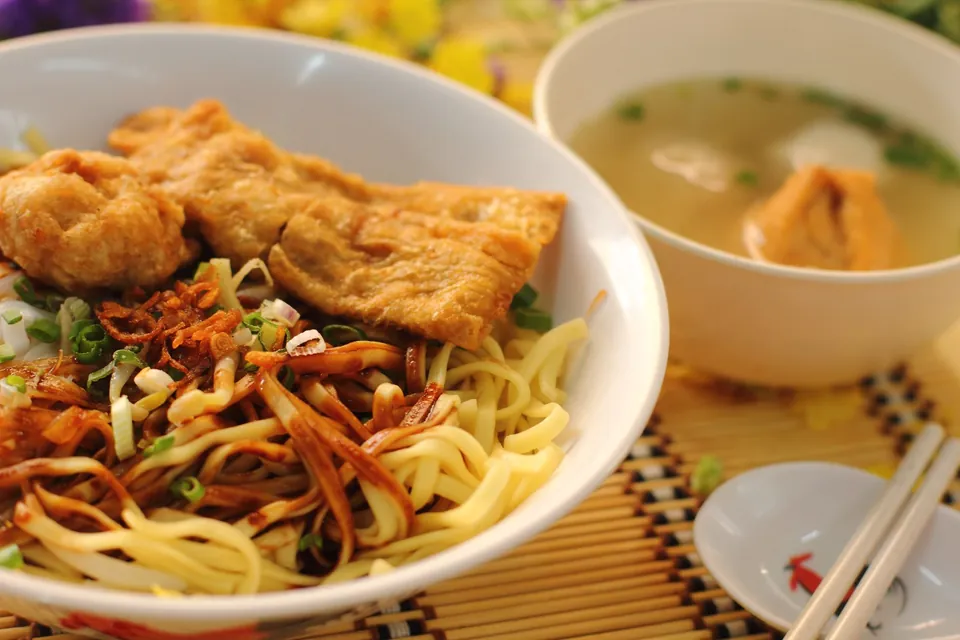
For the dry dressing, mix light soy sauce, a little dark soy sauce, shallot oil and a pinch of sugar, then toss the drained noodles in it while they are hot. Our serving ideas page has more bowl ideas.
The five core ingredients we make
A noodle bowl is only as good as its toppings. Our main line is the Kampar fish ball noodle ingredients (金宝鱼丸粉料), and these five are its heart:
- Fish Ball (西刀鱼丸): our classic white fish ball, made with fresh wolf herring (西刀鱼) and often called 鱼蛋. It is the same product under both names.
- Jow Yuan (炸鱼丸): our fried fish ball, golden outside and soft inside. It soaks up broth and adds a second texture to the bowl.
- Ipoh Dried Cuttle Fish Ball (吊片飞丸): a fish ball made with dried cuttlefish, with a savoury, seafood flavour.
- Stuffed beancurd skin (酿腐竹): beancurd skin rolls fried golden, crisp on a dry bowl and soft in soup.
- Stuffed tofu (酿豆腐): tofu stuffed with fish paste, soft and springy.
We also make fish cake, sliced into the bowl or pan-fried first, and Kampar Curry Noodle Paste for a curry bowl.
The current range, pack sizes and prices can change, so contact us to confirm what is available before you order. Ask about ingredients and allergens for the exact product you choose.
Running a noodle stall or restaurant? Our guide for restaurants and noodle shops explains how to plan quantities, and the wholesale page explains how to request a quotation. If you are comparing suppliers, the fish ball buying guide lists the questions to ask.
Our story: a family recipe since 1968
Our fish ball recipe began in 1968 as a family recipe, handed down from the owner's parents. Over the years the team has changed how the fish balls are made, but only in two ways: improving the cleanliness of production and the quality of the fish. The taste has never been changed. The fish balls our customers buy today are meant to taste the way the family made them more than fifty years ago.
The business was incorporated as KAMPAR FISH BALL SDN. BHD. in 2009 (SSM 868071-K) and operates from Taman Perindustrian USJ 1 in Subang Jaya, Selangor. Our main line is the Kampar fish ball noodle ingredients, led by the five core products above, with fish cake and curry noodle paste as sub-products. We sell them retail and wholesale to households, noodle stalls, kopitiams, restaurants and retailers. Read more about us.
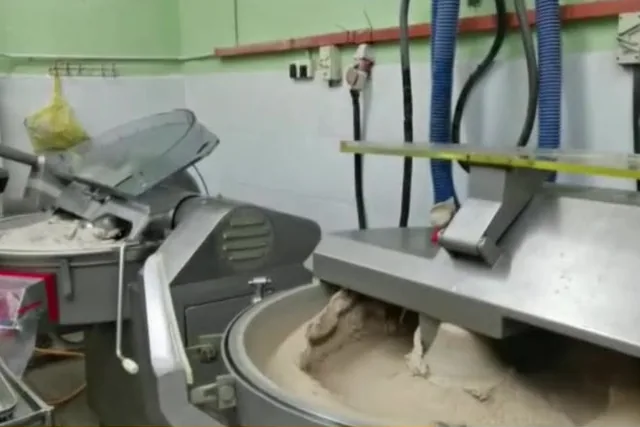
- 1968: the family recipe begins.
- Over the years: cleaner production and better-quality fish, with the taste kept the same.
- 2009: KAMPAR FISH BALL SDN. BHD. is incorporated.
- Today: the five core Kampar noodle ingredients, made in Subang Jaya for retail and wholesale buyers.
Buying, storing and serving safely
Fish balls are a fresh fish product, so handle them with the same care as fresh seafood. The WHO Five Keys to Safer Food give simple rules that apply at home and in a kitchen:
- Keep chilled or frozen fish balls cold until you cook them, and store them as the pack label directs.
- Thaw frozen fish balls in the refrigerator rather than on the counter.
- Cook until they are steaming hot in the centre.
- Refrigerate leftovers within 2 hours and reheat them until steaming hot.
Quick answers
Is Kampar Fish Ball located in Kampar?
No. Kampar Fish Ball is based in Subang Jaya, Selangor. Kampar is part of our name and of the fish ball tradition we draw on, but we have no branch in Kampar or Ipoh.
Do you sell bowls of fish ball noodles?
No. We make the ingredients for the bowl: 西刀鱼丸, 炸鱼丸, 吊片飞丸, 酿腐竹 and 酿豆腐, plus fish cake and curry noodle paste. Fish ball noodles are a serving idea for using them at home or in your own kitchen.
Can restaurants and noodle stalls buy from you?
Yes. We supply retail and wholesale buyers. Send your business location, estimated quantity and preferred date on WhatsApp or call 012-940 6911 for a quotation.